.svg)




In home services, good technicians are hard to find and even harder to keep. Whether you’re in lawn care, plumbing, pest control, or HVAC, employee retention is often closely tied to customer retention. Lose a good technician, and you could lose the customers they serviced.
It doesn’t always happen that customers follow their technician, but it happens often enough that losing good guys isn’t worth the risk. Plus, losing techs is expensive. We’ve tallied the costs before: on average, it costs between 1x and 2x the original employee’s salary to recruit, replace, and train up the new guy.
In this guide, we’ll break down exactly how to increase employee retention in home services so you lose less in avoidable expenses and opportunity costs to technician churn each year.
The 6 elements of an effective employee retention strategy
Increasing employee retention feels like an art, but it’s more of a science. Integrating the following six elements into your employee retention strategy will significantly reduce turnover:
- Clear expectations & performance data
- Competitive pay & benefits
- Specific, individualized, and real-time recognition and rewards
- Consistent, open communication
- Career development & advancement opportunities
- A supportive hiring & onboarding process
Let’s dive into how home services business owners can make it happen.
Radical clarity: Make expectations & performance clear to all
In home services, ambiguity is bad for business. It leads to high variance in technician performance, uncertainty and doubt among technicians about where they stand, and a sharp decrease in employee engagement.
By contrast, those who receive frequent feedback on their performance report higher rates of employee engagement, and higher employee engagement is one of the strongest predictors of long-term retention.
Radical clarity gives technicians the accurate feedback and performance data they need to feel confident in their place at your organization. When expectations are explicit, measurable, and fair, are more likely to feel engaged and appreciated.
Start by defining what good performance actually looks like on your team.
For most HVAC, plumbing, lawn, and pest-control businesses, that includes core metrics like:
- Customer NPS
- Review count & rating
- Reservice frequency
- Time on-site
- Driving score
- Attendance
- Average jobs per day
- Route completion
Track these metrics in a highly-visible and easily accessible place. This could be on a whiteboard in your office or, ideally, in a scorecard app your techs can check from their phones.
What matters most is that technician performance data and feedback is:
- Fair: Based on concrete and observable behaviors
- Consistent: Updated at a regular cadence for all technicians
- Relevant: Tied to the performance metrics that matter most to your business
Competitive compensation & benefits
You can have the best culture, clearest scorecards, and strongest recognition program in the industry, but if your compensation lags behind the market, you’ll still lose technicians. I
In home services, where skilled labor is scarce and demand is high, pay and benefits are a retention strategy. Competitive compensation builds the foundation that every other retention effort sits on.
Start with fair, market-aligned pay. Here’s the median pay across industries, based on the latest figures from the Bureau of Labor Statistics:
- HVAC: $59,810 per year ($28.75 hourly)
- Lawn: $37,360 per year ($17.96 hourly)
- Plumbing: $62,970 per year ($30.27 hourly)
- Pest control: $44,650 per year ($21.46 hourly)
- Electrical: $62,350 per year ($29.98 hourly)
While these are the most recent stats for the median across industries, salaries by region and state vary significantly.
But compensation is only the first layer. A strong benefits package is just as important. Health insurance, retirement options, and paid time off vary significantly from business to business in home services. If your benefits package stands out, you could make it very hard for your best technicians to leave despite high demand for their skillset.
If you’re in a hot market and unable to compete on salary, consider offering more paid time off (PTO) or other perks. Depending on sector, it could set you apart more than you think:
- In 2024, 66% of lawn care companies increased the number of PTO days for employees (66%) as part of their retention efforts, while 57% started reimbursing certifications and enhanced their medical benefits packages.
- As of 2022, only 52% of pest control companies offered their employees medical benefits.
- On the other hand, the vast majority of HVAC companies (93%+) offer full-time employees medical benefits, so benefits packages do need to be a bit more competitive in this sector.
But bear in mind that compensation and benefits only work when they’re transparent. Explain how raises are determined. If your benefits package is competitive, talk about it clearly and often. Many companies offer strong benefits but hide them behind jargon or don’t explain their value. Make it easy for technicians to see exactly what they’re getting beyond a paycheck.
Competitive compensation and benefits won’t solve every retention challenge, but they create the stability that makes every other effort stick.
Recognition & rewards: Make great work visible & valuable
Technicians spend most of their day alone driving between jobs or working in crawl spaces and yards. They rarely get the casual, in-the-moment encouragement that in-office teams take for granted. That isolation makes recognition one of the strongest levers you have for improving employee retention, if you use it.
But for recognition and rewards to work, they have to be:
- Real-time, or close to it: The closer the reward and recognition are to the positive behavior, the more likely employees will feel appreciated & repeat the win.
- Tied to individual performance: The most effective recognition for increasing company loyalty and performance is tied to the individual and their specific achievements. Specific is better than vague, and praise for an individual is better than praise for the whole company.
- Attached to a small financial incentive: The reward most employees appreciate most is money. They prefer a small financial reward over gift cards, top-offs on their paycheck, and team dinners. Attaching a small financial reward to your words of recognition isn’t just encouraging; it can even convince those who planned to leave soon to stay.
In terms of how you deliver the recognition, both public and private recognition are effective in increasing employee engagement and retention. However, private recognition should optimally come from the technicians’ direct manager; this type of private recognition is much more motivating than recognition from a peer.
When recognition is immediate, specific, tied to performance, and attached to a financial bonus (however small), it becomes one of the strongest contributors to long-term retention.
Communicate early & often: Communication creates culture
The occasional pizza party and branded hoody is a bonus, but these perks don’t make technicians stick around for the longhaul.
Rather, open communication that makes technicians feel supported and in-the-loop creates a healthy culture that promotes long-term retention. It’s built on communication—steady, predictable, and baked into how your team operates.
Here are a few simple practices owners can implement today to make technicians feel heard, supported, and invested in the wider company culture:
- Daily team huddles or dispatch briefings: These regular touchpoints keep jobs, schedules, and expectations aligned. They also remind techs (who spend most of the day solo) that they’re part of a team. Even a 15 minute sync at the start of the day can help foster a company culture of cohesion, team camaraderie, and open communication.
- Consistent, open feedback loops: Ensure the following three channels of communication are open:
- Customer -> technician: Techs need visibility into customer satisfaction, whether it be via NPS scores, reviews, or feedback in the CRM. Positive comments build pride, and pride increases both retention and productivity; negative ones create coaching moments. When techs understand the customer impact of their work, engagement rises.
- Manager -> technician: This is the loop most companies unintentionally close. Technicians need consistent feedback, including both corrective coaching and recognition, to feel seen and appreciated by their managers. Culture is relational: to feel connected to a workplace, technicians must feel they have a positive, open relationship with their direct manager.
- Technician -> manager: Just as important as the channel of communication from manager to technician is the channel from tech to manager. Technicians should feel safe raising concerns about workload, tools, scheduling, or customer issues. The only way this loop works is if leaders respond. Acknowledge concerns, communicate next steps, and close the loop so techs know their feedback is taken seriously.
A daily touchpoint that fosters alignment and belonging across the business and consistent feedback loops help techs feel a sense of connection and belonging, strengthening the social bonds that contribute to higher retention.
Clear paths for career development and advancement
One of the most overlooked drivers of technician retention is career clarity. When the path forward feels undefined, inconsistent, or hidden behind manager discretion, even your best people start looking elsewhere.
Start by mapping out a clear, transparent career ladder. It doesn’t need to be complicated. Most home-services teams benefit from a simple structure like:
- Technician I (apprentice or entry-level)
- Technician II
- Senior Technician
- Trainer or Specialist
- Field Supervisor
- Branch Lead or Manager
Define what each step requires (skills, certifications, performance benchmarks, customer feedback metrics, safety standards, etc.) and put it in writing. When technicians know exactly what it takes to advance, they feel like the time they invest in developing their skills and contributing to company progress are worthwhile.
Back up the ladder with real opportunities for skill development. Offer paid training, licensing reimbursement, manufacturer certifications, safety courses, or mentorship programs. Even small, low-cost development initiatives make a major difference. Technicians who feel like the company is actively helping them grow stay longer and perform better.
Then, make professional growth part of your ongoing communication rhythm. Use monthly reviews or quarterly check-ins to talk about goals, next-step readiness, and areas for improvement.
Finally, celebrate internal promotions publicly. When technicians see peers advancing, it signals two things:
- Advancement is real, not theoretical.
- The company values and rewards long-term contribution.
This visibility creates a self-reinforcing loop: ambitious techs push for growth, new hires see a future, and your entire workforce becomes more stable.
Supportive hiring & onboarding processes
Most turnover problems begin in week one. In home services, the first 30–90 days determine whether a technician feels confident, supported, and ready to succeed, or overlooked, overwhelmed, and one bad day away from quitting.
Start with intentional hiring. Many home-services companies hire reactively, scrambling to fill roles during busy seasons or plugging holes after a tech quits. But reactive hiring leads to mismatches.
Hiring managers overlook red flags, skip important conversations, or neglect to explain role expectations clearly. Then, technicians who feel blindsided by job realities, misaligned with company expectations, or unprepared for field work leave or wash out fast.
Clear job descriptions, transparent expectations, and structured interviews help ensure the right people join your team. When new hires understand exactly what success looks like and what the day-to-day actually entails, they’re far more likely to stay.
Once a technician says yes, onboarding becomes the most critical phase of their entire employment experience. Up to 33% of new employees quit within the first 90 days, largely due to poor onboarding, unclear expectations, or lack of support. In home services, where work is complex and often solitary, onboarding is not something you can afford to improvise.
A high-retention onboarding process includes:
- A clear, organized first week: Introduce the team, set expectations, and review processes, safety standards, and customer-service basics. Avoid sending new hires straight into high-pressure jobs on day on. Early overwhelm is a major turnover trigger.
- Ride-alongs and mentorship: Pair new technicians with strong performers for the first few weeks. Ride-alongs accelerate skill development, model best practices, and give new hires a safe space to ask questions.
- Early wins: Assign manageable jobs early on. A few successful service calls in the first week build confidence, reduce anxiety, and reinforce self-efficacy; a proven predictor of long-term good performance.
- Frequent check-ins: Weekly 1:1s during the first 90 days help catch issues early and give new hires a clear place to ask for help. These conversations build trust and prevent small frustrations from snowballing.
- A roadmap for growth: Even during onboarding, show technicians what’s possible. Outline the career path. Connect performance to advancement. Make the future feel visible.
When hiring and onboarding are structured, supportive, and intentional, new technicians ramp faster, feel more confident, and stay longer.
Increase employee retention with Applause
To make your employee retention strategy stick, automate as much of it as you can.
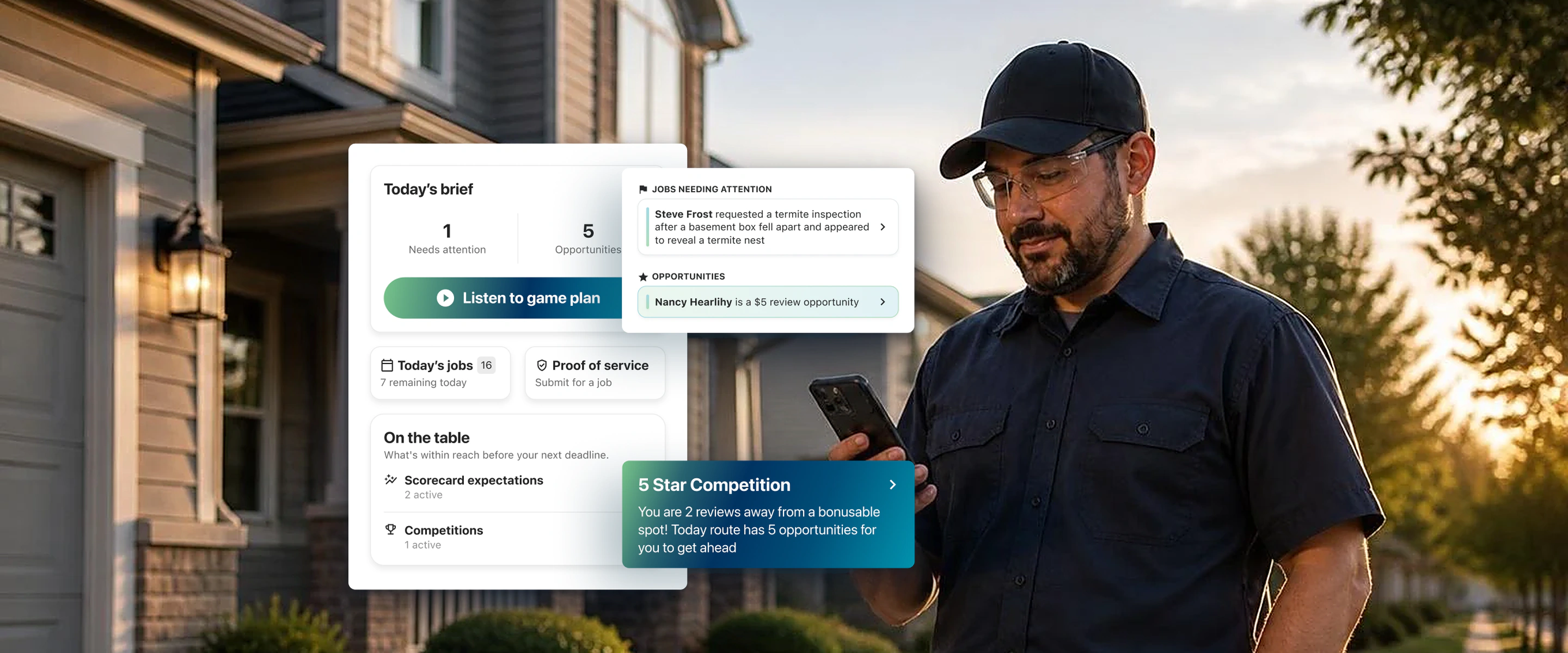
Applause Scorecards and performance incentives make it simple to track, manage, coach, and reward performance across your crew.
With Scorecards, you get:
- Real-time visibility into goals and progress
- Clear performance expectations across key metrics
- Automatic bonuses as soon as techs hit their targets
- A single, unified view that integrates performance data from your CRM, fleet management tools, and Applause itself
- Leaderboards and competitions where techs can see how they compare to peers and compete for a reward
Ready to reduce technician turnover for good? Chat with our team.
.webp)