.svg)



A referral program for home services is a structured system that rewards your existing customers — and your own technicians — for sending you new business. Done right, it's the cheapest, highest-trust lead channel you'll ever run: no ad auction and no cold list required. Just satisfied homeowners pointing their neighbors at the company that already did right by them.
The catch is that "do right by them" isn't enough on its own. Most home services companies sit on a mountain of goodwill they never convert, because they treat referrals as something that just happens instead of something you build.
This playbook fixes that.
Below, we'll cover why referrals out-perform every paid channel in the trades, the single gap that's costing you leads right now, and a step-by-step system for picking incentives, timing the ask, tracking every referral, and paying out for both customers and crews.
Why referrals are the highest-ROI channel in home services
Trust is the whole game in the trades, and nothing else comes close to a recommendation from someone you know.
Nielsen's global research found that 92% of consumers trust recommendations from friends and family above every other form of advertising. That’s more than search ads, more than your website, and more than any billboard or radio spot you could buy.
That trust translates straight into better economics. Referred customers convert at roughly 4x the rate of cold leads, retain about 37% longer, and carry a 16% higher lifetime value than customers who came in through paid channels. These findings are credited to research from the Wharton School and Deloitte. In a business where a single HVAC system replacement or a multi-year pest or lawn contract can be worth thousands, "retains longer and is worth more" is the difference between a profitable route and a churning one.
Home services is almost engineered for referrals:
- It's hyper-local. Your customers' best prospects are the people on their street, in their HOA, and in their group chats.
- It's relationship-driven. A tech who shows up on time and explains the problem earns the kind of loyalty that gets a name passed along.
- It's recurring and high-consideration. Recurring services (pest, lawn, maintenance plans) create repeated moments of satisfaction, and big-ticket jobs (HVAC, electrical, repipes) are exactly the purchases homeowners ask their neighbors about before they buy.
When you're thinking about how to generate more leads in field service, the most overlooked answer is already in your CRM: the customers who just gave you five stars.
The referral gap: the leads you're already leaving on the table
According to research out of Texas Tech University, 83% of satisfied customers are willing to refer a business — but only 29% actually do. That's roughly a 54-point gap between intent and action.
That gap isn't a service problem. Your customers want to refer you.
They just don't, because:
- Nobody asked them at the right moment.
- They don't know a referral program exists.
- Sharing felt like a chore. They'd have to dig up your number or explain how to find you.
- There was no reason to act now instead of "next time it comes up."
Every one of those is a system failure, not a goodwill failure. And every one is fixable. But you have to remove the friction between a happy customer and a sent lead. The rest of this playbook is how you do that.
How to build your customer referral program: a 6-step playbook
Step 1: Choose an incentive that actually moves people
The reward is the engine. A few principles that hold up across verticals:
- Go double-sided. Reward both the referrer and the new customer ("Give $50, Get $50"). Double-sided structures consistently outperform one-sided ones because they give your advocate a reason to share and the friend a reason to act.
- Match the reward to the relationship. Account credit and service discounts work well for recurring verticals (pest, lawn) where the customer will be back. Cash, gift cards, or a charitable donation tend to feel more generous for one-and-done big-ticket jobs (HVAC installs, panel upgrades).
- Make it worth a real customer's time. A token reward gets token participation. Size the offer so a busy homeowner actually feels it's worth pulling out their phone.
- Make the math defensible. Set the reward against your blended cost per acquisition. If a referred customer is worth materially more and costs a fraction of a paid lead, a generous reward is still a bargain.
Step 2: Time the ask for the moment of peak satisfaction
Timing beats wording. The best moment to ask for a referral is the same moment a customer is thrilled with the work: right after the wasp nest is gone, the AC is blowing cold again, or the lawn looks better than the neighbor's. Wait a week and that emotional high is gone.
Your technician is your single best asker, because they're standing in the home at that exact peak. A quick, genuine "if you know a neighbor who needs this, we'd love the introduction. And there's something in it for both of you" lands far better than an email three days later. Back that in-person ask with an automated follow-up so nothing depends on memory.
This is also why your referral ask should ride on the same trigger as your review and feedback requests: job completion. A customer who just left you five stars is already in the exact mindset to send a neighbor your way. Capture both in one motion.
Step 3: Make sharing effortless
The 54-point referral gap is mostly a friction problem, so engineer the friction out:
- Give every customer a unique link by default — no sign-up form, no "join the program" hoop to jump through.
- Send it by SMS. Text gets opened and forwarded far more than email, and it matches how homeowners actually share things.
- Pre-write the message so your customer can pass it along in one tap instead of composing a pitch.
If sharing takes more than a few seconds, the willing-but-busy 83% stay willing-but-busy.
Step 4: Attribute and track every referral
You can't reward, optimize, or scale what you can't see, and "tracking referrals" on a whiteboard or a spreadsheet falls apart the moment volume picks up. A real system needs to:
- Tie every referral to the customer who sent it, so the right person gets credited and rewarded automatically.
- Track each lead through the funnel: referred → booked → closed — so you know your real conversion rate, not just your share count.
- Roll up campaign performance in one place so you can see which incentives, verticals, and offers drive the most pipeline.
Clean attribution is also how you spot your best advocates: the handful of customers who send you several neighbors a year and deserve to be treated like the channel they are.
Step 5: Pay out fast and reliably
Nothing kills a referral program faster than a customer who never sees their reward. Define the qualifying event clearly (usually "the referred customer's first paid job"), automate the payout, and communicate it. Speed and reliability are what turn a one-time referrer into a repeat one.
Step 6: Close the loop on every referred lead
A referral is a warm lead, not a closed sale. Route referred leads to your fastest, best closers, respond quickly, and report back to the referrer when it works ("Thanks — your neighbor is now a customer, and your credit is on the way"). That feedback loop is what produces your next referral. This is the same discipline that separates companies that win on lead conversion from those that let warm leads go cold.
Keep your referral incentives clean: a compliance note
One trap worth flagging, because it trips up a lot of well-meaning operators: rewarding referrals and rewarding reviews are not the same thing, and one of them can get you penalized.
Paying a customer for introducing a new paying customer is a standard, legitimate referral program. Paying a customer for leaving a review (or conditioning any reward on review sentiment) violates Google's policies and runs afoul of the FTC's 2024 rule on consumer reviews. The fix is simple: tie your referral rewards strictly to new-customer acquisition, never to whether or how someone reviews you. If you want the full breakdown of what's allowed, read our guide to Google's rules for incentivizing reviews before you launch.
The metrics that tell you it's working
Track these performance metrics from day one so your program earns its keep instead of running on vibes:
- Participation rate - the share of eligible customers who actually refer. This is your direct readout on the referral gap.
- Referral conversion rate - referred leads that become paying customers.
- Referrals per customer - how many net-new customers your average advocate produces.
- Cost per acquisition vs. other channels - the number that proves referrals are your cheapest pipeline.
- Referred-customer LTV and retention - to confirm you're acquiring better customers, not just cheaper ones.
How Applause turns great service into referral pipeline
Applause is the simplest way to put a referral flywheel on autopilot.
Applause automatically facilitates:
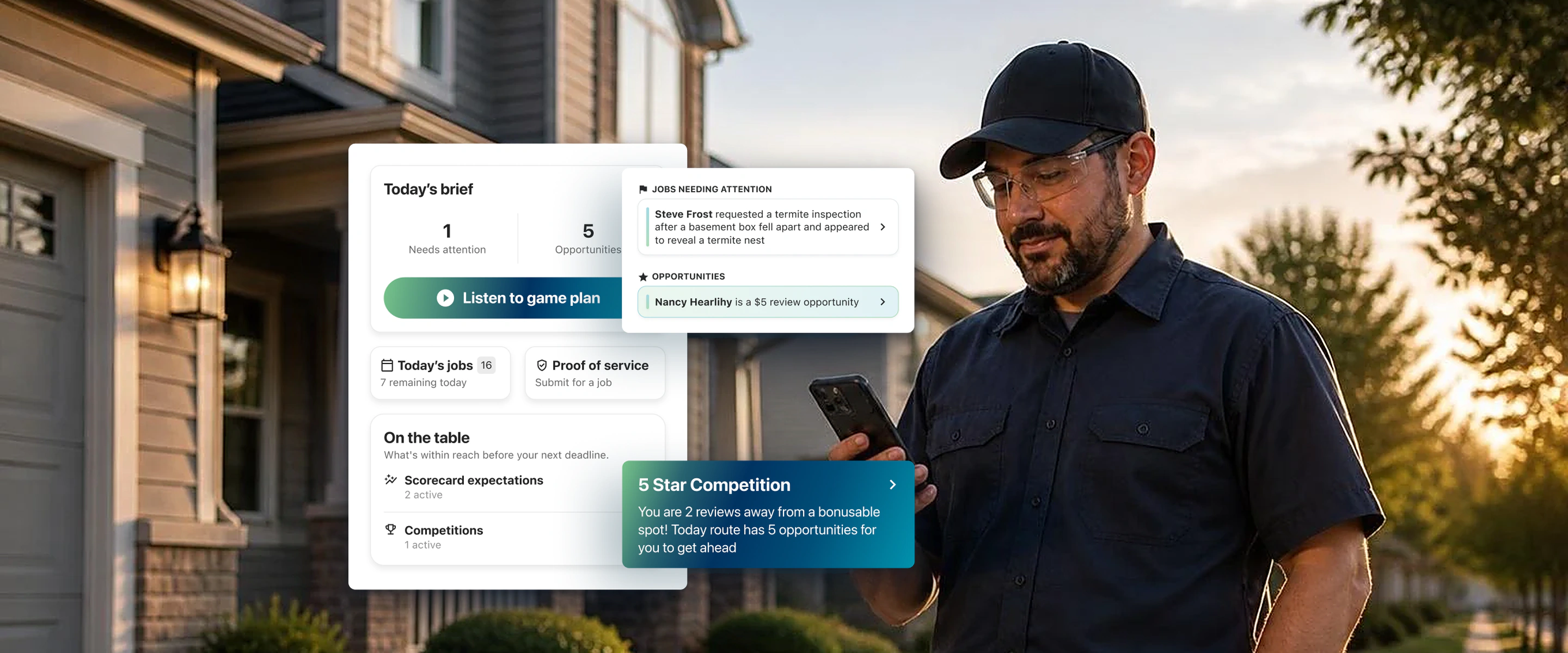
- Perfectly-timed asks. Applause automates referral, review, and upsell requests for the moment your customer is most satisfied (right after the job) so you're catching that 83% before the goodwill fades.
- Effortless sharing. Requests go out by SMS, the channel homeowners actually use to pass things along, so referring takes seconds instead of effort.
- One place to see what's working. Campaign performance across verticals, incentives, and offers lives in a single view, so "tracking referrals" stops being a spreadsheet problem.
- Rewards that get used. Run referral reward campaigns and pay out automatically when a referred customer becomes a paying one, the reliable follow-through that turns a one-time referrer into a repeat one.
Frequently asked questions
What is a referral program for home services?
It's a structured system that rewards existing customers — and often your own technicians — for sending qualified new customers to your business. Unlike word-of-mouth that happens by chance, a referral program makes the ask deliberate, the sharing effortless, and the reward automatic, so you capture far more of the referrals your happy customers were already willing to give.
What's the best incentive for a home services referral program?
Double-sided rewards (where both the referrer and the new customer get something) consistently outperform one-sided ones. Use account credit or service discounts for recurring verticals like pest and lawn care, and cash, gift cards, or donations for one-time big-ticket jobs like HVAC or electrical. For technician referrals, cash bonuses paid in real time work best — 79% of techs prefer them.
How do I track referrals without a spreadsheet?
Give each customer a unique referral link or code, tie every referred lead to its source, and track it through the funnel from referred to closed. Referral and incentive software automates this — including attributing each referral to the specific technician who earned it — so you can measure conversion and pay out without manual tracking.
Is it legal to pay customers for referrals?
Yes. Rewarding customers for introducing new paying customers is a standard, legitimate practice. What's prohibited is paying for reviews or conditioning rewards on review sentiment, which violates Google's policies and the FTC's rules. Keep referral rewards tied strictly to new-customer acquisition, not to whether someone leaves a review.
How is an employee referral program different from a customer one?
A customer referral program turns homeowners into a lead channel. An employee referral program turns your crew into one — both by rewarding technicians for the customer referrals and leads they generate in the field, and by paying them to refer qualified new hires, which is often the cheapest, highest-quality recruiting source in a tight labor market.
Ready to turn your happiest customers into your best sales channel? Chat with our team.