.svg)
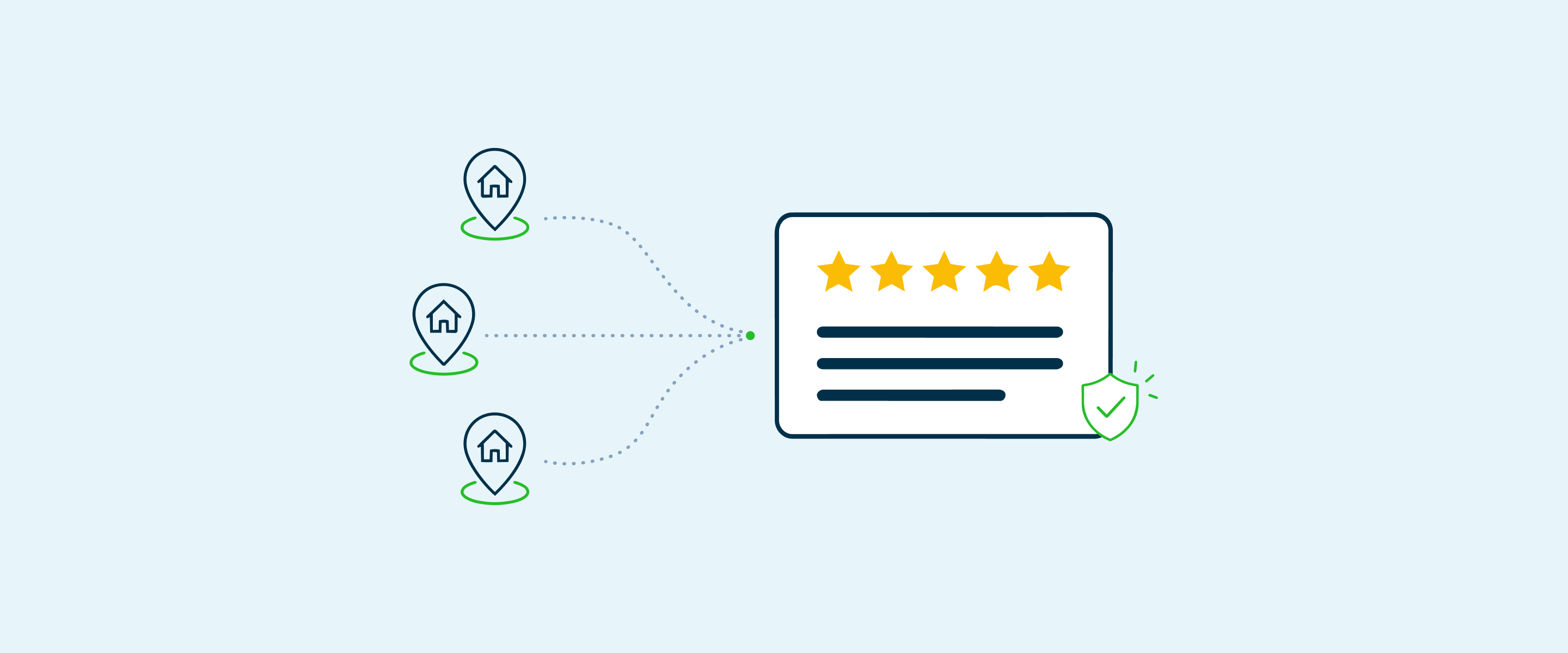



Reviews are the single most influential local ranking factor in home services. They are also the highest-trust signal a homeowner consults before letting a stranger into their attic, basement, or crawl space. A whopping 75% of homeowners always or regularly read online reviews when evaluating a local business.
Get reputation management right across every location and you build visibility, conversion, and revenue. Get it wrong and a single underperforming branch can drag down search visibility for the entire brand.
This is the playbook for getting it right at scale.
Why multi-location reputation is a different beast than single-location
Reputation management at a single-location business is a marketing task. At a multi-location home services brand, it is an operational discipline.
Four structural problems make it harder:
- Visibility. Each branch shows up in its own local pack, gets evaluated by Google's local algorithm independently, and competes against different local rivals. A 4.8-star average across the brand means nothing if three locations are sitting at 3.7 and getting buried in the SERP for their service area.
- Autonomy. Branch managers and franchisees have day-to-day customer relationships, but corporate owns the brand standard. Without a clear model for who responds, who escalates, and who reports, reviews fall through the cracks or get handled inconsistently in ways that create legal and brand exposure.
- Data fragmentation. Reviews live on Google, Yelp, Facebook, BBB, Angi, HomeAdvisor, Nextdoor, and Thumbtack. Each platform has its own dashboard, its own notification system, and its own response interface. Without centralization, no one has a real picture of brand health.
- Contagion. A homeowner in Phoenix searching your brand name does not distinguish between the Scottsdale location and the Tempe location. They see your brand. One bad location pulls down trust for all of them.
The multi-location reputation management playbook
Execute the following five steps in order across each of your locations to boost your reputation across the board, across all public touchpoints.
Step 1: Centralize visibility before anything else
Build a single source of truth for review data across every platform and every location. That means location-level dashboards that roll up to regional and brand-level views.
The metrics that actually matter at scale are:
- Response rate
- Average response time
- Monthly review velocity
- Sentiment trend
An important note: a 4.6-star location with 12 reviews in the last year is in worse shape than a 4.4-star location with 80 reviews in the last six months. Volume and recency are weighted heavily by Google's local search algorithm.
Centralization also exposes the locations that are dragging the brand down.
Most operators we talk to are surprised when they first see the data laid out by location. The 80/20 rule applies here. A small number of underperforming branches typically account for the majority of brand reputation risk.
Step 2: Standardize the review request engine
Review request volume is the single most underused lever in home services reputation management.
Most brands ask for reviews inconsistently, late, or not at all. Fixing this is the highest-leverage move you can make.
Timing matters more than wording. For HVAC, plumbing, and electrical work, the window between job completion and the homeowner forgetting the technician's name is short.
Send the request within two hours of job completion and response rates climb significantly. Wait 48 hours and you lose most of the willingness.
Step 3: Build a negative review response protocol every location can execute
Every location needs the same response protocol. Not the same templated text, but the same process. This is what protects the brand when a 1-star review hits at a branch where the manager is on vacation.
The 4-hour rule. Industry data consistently shows that customers expect a response within 24 hours, and brands that respond within four hours convert significantly more of those situations into recovered relationships or revised reviews.
As a rule of them, use this five-step framework when responding to negative reviews:
- First, acknowledge the customer's experience without admitting fault before you have facts
- Apologize for the experience itself, separate from any admission of error
- Take the conversation offline with a direct phone number and a named contact
- Document the review, the response, and the outcome in your reputation system
- Follow up after resolution to ask whether the customer would consider updating their review
A few things to make sure you never include in a public review response:
- Customer names, addresses, or any identifying detail beyond what they shared
- Service-call specifics that could expose health, financial, or property information
- Confrontational language
- Any suggestion that the customer is wrong, lying, or mistaken
When to flag for removal versus respond
Flag reviews that violate platform policy (profanity, threats, clearly fake content, off-topic complaints, reviews left by people who were never customers).
Respond to legitimate complaints, even bad ones. Attempting to remove a legitimate negative review will have a much bigger impact than responding politely. The Streisand effect is real.
Step 4: Solve the franchisee and branch manager problem
Corporate-only review management fails. Branch-only review management fails. The only one that works is a hybrid approach.
Corporate sets the standard, owns the tooling, defines the response framework, handles legal escalations, and reports brand-level performance. The branch owns the customer relationship, drafts the response, and executes the offline recovery. A simple permissioning and approval workflow lets corporate review responses for sensitive situations without bottlenecking the 4-hour response window for routine ones.
Three tactics that move branch behavior:
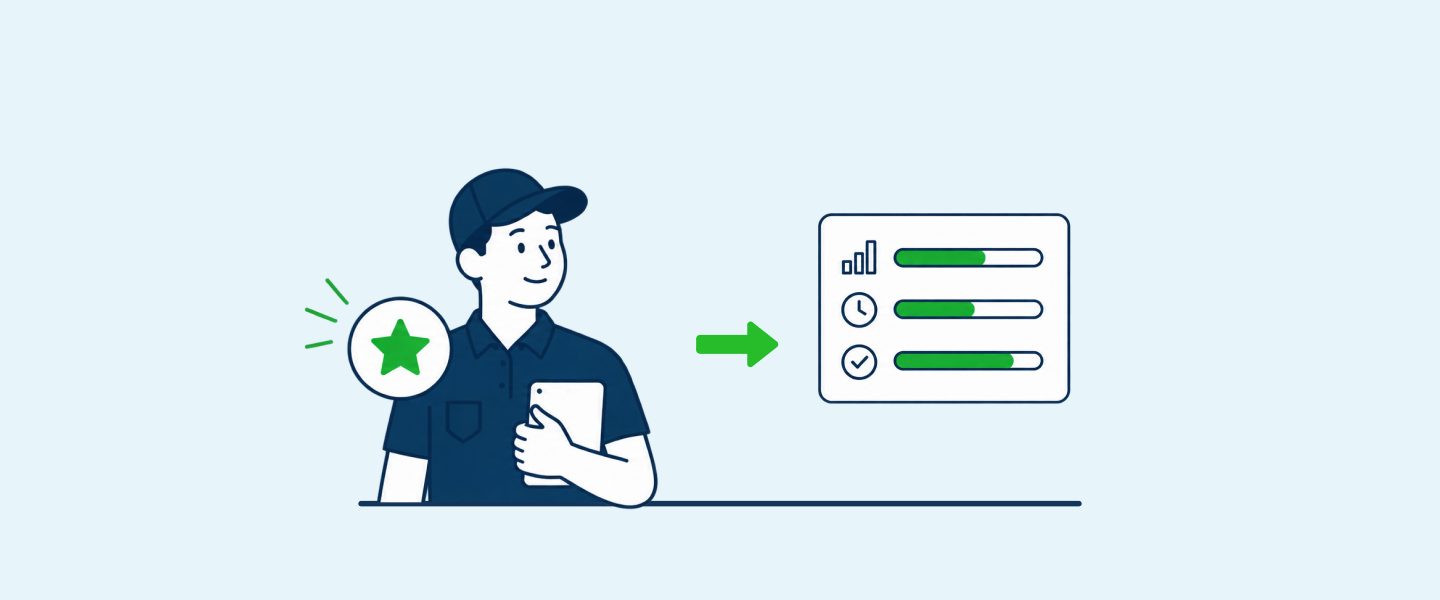
- Tie a portion of branch manager incentive comp to reputation KPIs. Not just star rating, which is a lagging indicator, but response time and review velocity, which are leading indicators they can directly control.
- Build review performance into weekly operational reviews. The same way you cover safety, revenue, and crew utilization, cover reputation. What got reviewed last week, what got responded to, what trends are emerging.
- Make the tool effortless at the branch level. If responding requires logging into seven platforms, branch managers will not do it. If everything routes through one inbox with templated starting points and one-click escalation, they will.
Step 5: Turn review data into operational intelligence
This is where most brands stop. They get reviews flowing, they respond on time, and they call it done. The brands that build their advantage take it one step further and turn review data into operational intelligence.
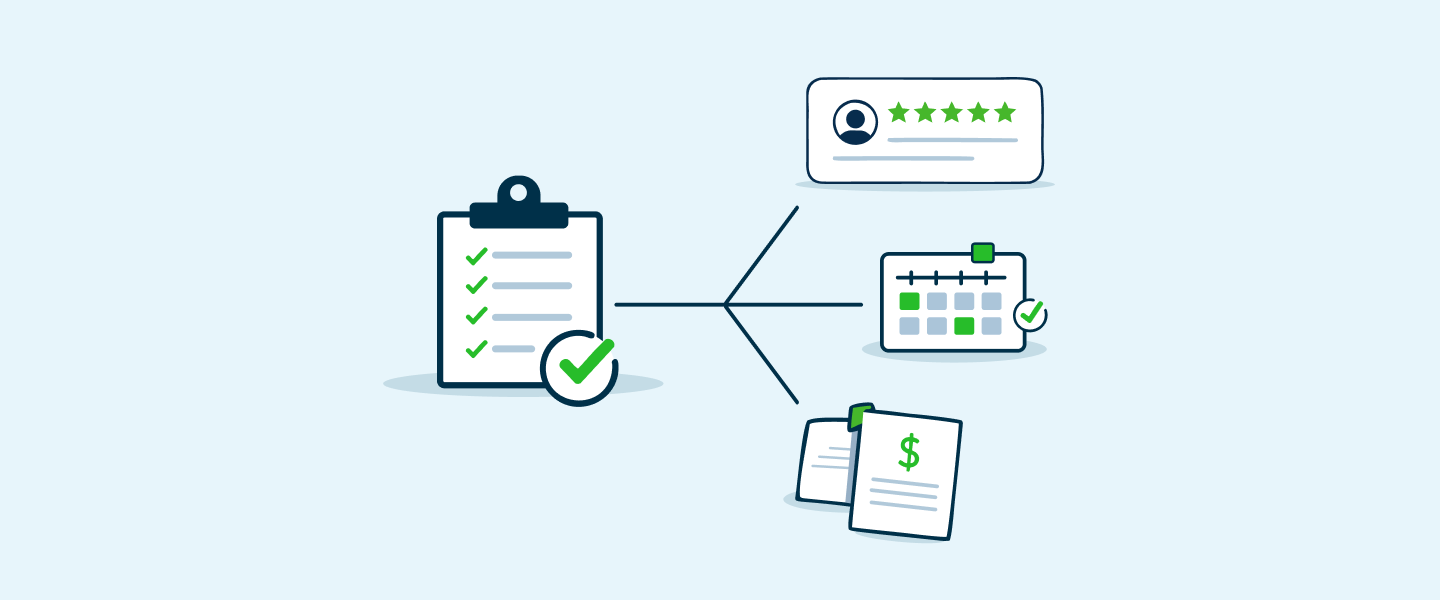
Tag every review by topic. Technician punctuality, pricing transparency, follow-up communication, parts availability, scheduling experience, billing accuracy, cleanliness on the job, and more. The categories will be specific to your trade.
Once you have three months of tagged data at the location level, patterns emerge that no other source in the business will surface.
A location getting consistently dinged on punctuality has a dispatch problem. A location getting hit on pricing transparency has a quoting or sales problem. A location with rising mentions of "had to come back twice" has a first-time-fix-rate problem.
These are operational signals showing up in your reputation data before they show up in your churn or your revenue.
The feedback loop is the entire point. Reviews surface operational issues, operations fix the issues, fixes show up in better reviews, better reviews drive better local pack rankings, and better rankings drive more booked jobs.
The tech stack: What multi-location home services brands need
A reputation management tool built for a single location, scaled up by adding locations, will fail you. The requirements at multi-location are categorically different.
What to look for:
- True multi-tenant architecture with location, regional, and brand-level views. Permissioning that lets branch managers act within their location while corporate maintains visibility and override.
- Integrations with the systems home services actually run on. Field service management platforms like ServiceTitan, Housecall Pro, and Jobber. CRMs that hold customer contact data. Communication platforms that send the requests. Google Business Profile API access for managing profiles at scale.
- Location-level KPIs, regional rollups, brand-level scorecards, and the ability to slice by location.
- Response workflows that include templated starting points, approval routing for sensitive responses, and audit trails for compliance.
Measuring what matters: The multi-location reputation scorecard
Most scorecards focuses on lagging indicators. Star rating and review count tell you what already happened. The leading indicators tell you what is about to happen.

Common traps to avoid
Five recurring traps separate brands that get reputation right at scale from brands that struggle.
- The set-it-and-forget-it trap. Reputation is not a quarterly project. It is a weekly operational rhythm. Brands that build it into the standing meeting cadence keep performance up. Brands that revisit it every six months watch performance drift.
- The compliance theater trap. Responding for the sake of responding produces template-flavored responses that do nothing for the customer and signal to the next reader that the brand does not actually care. A great response is short, specific, and human. A bad response is a script.
- The averaging trap. The brand-level 4.6 star rating hides the location at 3.4. Always look at the floor, not just the average. The lowest-performing location is the one shaping the prospect's impression in that market.
- The incentive misalignment trap. If branch managers are measured only on revenue, reviews lose. If they are measured on reviews without operational context, they game the metric (incentivizing customers, gating requests, or worse). Tie the incentive to the leading indicators they control.
- The deletion-first trap. Brands that try to delete or suppress every negative review instead of responding to the legitimate ones lose twice. They lose the recovery opportunity, and they lose credibility with future readers who can see a wall of 5-star reviews looks suspicious. A small number of well-handled 2 and 3-star reviews actually increases conversion.
The bottom line
The brands that rise to the top of the Map Pack centralize visibility, standardize the request engine, build response protocols every location can execute, solve the corporate-versus-branch tension with a hybrid model, and turn review data into operational intelligence that compounds over time.
If you are running multi-location reputation management in spreadsheets and platform tabs, the cost is bigger than the time it takes. It is the visibility you are leaving on the table at every location, every week.
Ready to raise the bar across all locations? Applause can help. Chat with our team.
Frequently asked questions
What is multi-location reputation management?
Multi-location reputation management is the centralized system, tooling, and operational rhythm a brand uses to monitor, respond to, and learn from online reviews across every one of its physical locations. It includes review generation, response, sentiment tagging, reporting, and operational feedback at the location, regional, and brand levels.
How many reviews should each home services location be generating per month?
For active service trades like HVAC, plumbing, and electrical, 15 to 30 new reviews per month per location is a strong baseline. Lower-frequency trades like roofing or restoration may target 5 to 15. The right number is enough to keep recency in your favor with Google's local algorithm, which tends to weight reviews from the last 90 days more heavily than older ones.
How quickly should we respond to negative reviews?
Within four hours is the operational standard for multi-location home services brands that are recovering reviews and converting situations. Within 24 hours is the floor. Beyond 48 hours, the customer has typically moved on emotionally and the response stops functioning as a recovery and starts functioning as documentation.
Should corporate or the local branch respond to reviews?
The hybrid model wins. The branch drafts the response and owns the offline recovery because they have the customer context. Corporate provides the framework, the tooling, and the approval workflow for sensitive situations. Pure corporate response loses authenticity. Pure branch response loses consistency.
What review platforms matter most for home services?
Google Business Profile is the most important by a significant margin because of its impact on the local pack and Google Maps. After Google, Yelp, Facebook, and the BBB are the next tier. Trade-specific platforms like Angi, HomeAdvisor, Thumbtack, and Nextdoor matter based on your service mix and geography. Cover all of them in monitoring. Prioritize Google in request volume.
How do you measure ROI on reputation management?
The cleanest measurement compares booked-job conversion rates and local pack visibility before and after centralized reputation management is implemented, holding ad spend constant. Most multi-location brands see measurable lift in local pack visibility within 60 to 90 days and corresponding lift in booked jobs from organic local search. The harder-to-measure ROI is the operational intelligence that surfaces from sentiment tagging, which often reveals problems that would have hit revenue six to twelve months later if left unaddressed.


.webp)